Choosing between a metal roof and asphalt shingles is not simply a question of which material is “better.” The right choice depends on budget, the design of the home, roof slope, local weather exposure, how long you plan to keep the property, maintenance expectations, and the type of appearance you prefer. A useful metal roof vs asphalt shingles comparison looks at all of those factors together.
Asphalt shingles remain familiar on residential homes because they offer broad style choices and a lower initial price in many markets. Metal roofing typically requires a larger upfront investment but can provide a long service life, strong weather performance, and a distinct architectural look. Neither material should be selected based on one number alone.
Triple J Roofing offers both asphalt shingle roofing and metal roofing for homeowners comparing new-roof options.
Quick Comparison: Metal Roofing vs. Asphalt Shingles
| Factor | Asphalt Shingles | Metal Roofing |
| Upfront cost | Usually lower | Usually higher |
| Appearance | Traditional; many colors and profiles | Modern or traditional depending on panel/profile |
| Installation | Commonly faster and widely familiar to installers | More specialized detailing and installation |
| Maintenance | Periodic inspection; individual shingles may need repair | Periodic inspection; panels, fasteners, seams, coatings, and flashing need attention |
| Service life | Varies widely by product, installation, climate, and maintenance | Often longer, but also varies by metal type, system, climate, and installation |
| Repair approach | Localized shingle replacement can be straightforward | Repairs may require matching panels, coatings, seams, or fastener systems |
This Old House’s 2026 comparison notes the same broad pattern: asphalt is generally less expensive upfront, while metal tends to have a longer potential lifespan and lower maintenance needs when properly installed. Actual project pricing and performance vary by roof size, material grade, labor market, design complexity, and local conditions.
External reference: https://www.thisoldhouse.com/roofing/metal-vs-asphalt-roof
Asphalt Shingles: Familiar, Flexible, and Budget-Friendly
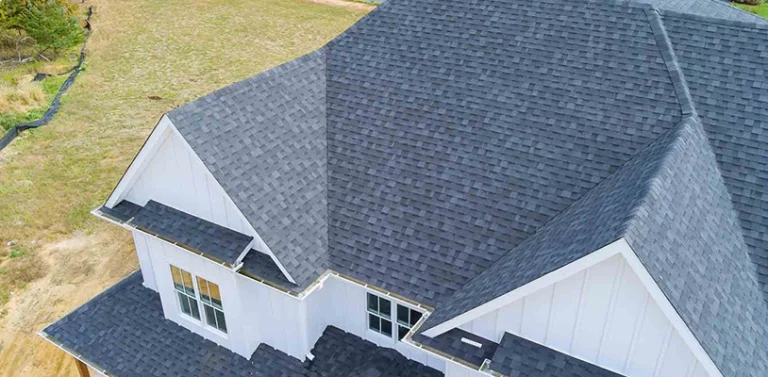
Asphalt shingles are one of the most common residential roofing materials in the United States. They are available in different grades, textures, and colors, making them easy to coordinate with many home styles. Architectural shingles create more depth than basic three-tab products, while premium designs may imitate the appearance of slate or wood shakes.
For many homeowners, the main advantage is the initial project cost. Asphalt roofing also tends to be familiar to a wide range of roofing crews, and damaged areas can often be repaired by replacing individual shingles or small sections when the surrounding roof remains in good condition.
- Lower initial material cost in many projects
- Wide range of colors and profiles
- Familiar residential appearance
- Localized repairs can be practical when damage is limited
- Compatible with many conventional steep-slope roof designs
For material-specific information, see Triple J Roofing’s Asphalt Shingles service page.
Metal Roofing: Long-Term Planning and Distinctive Performance
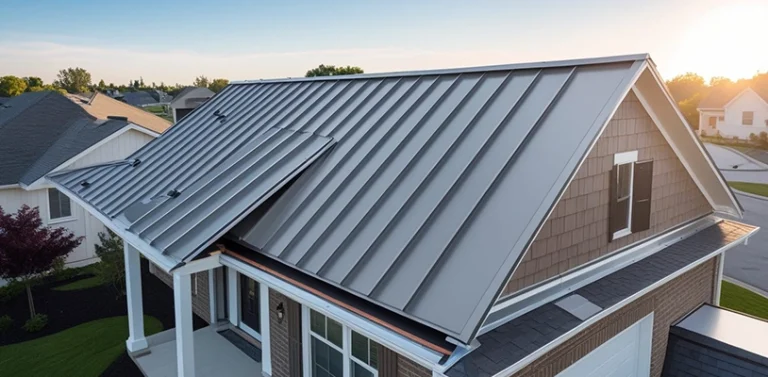
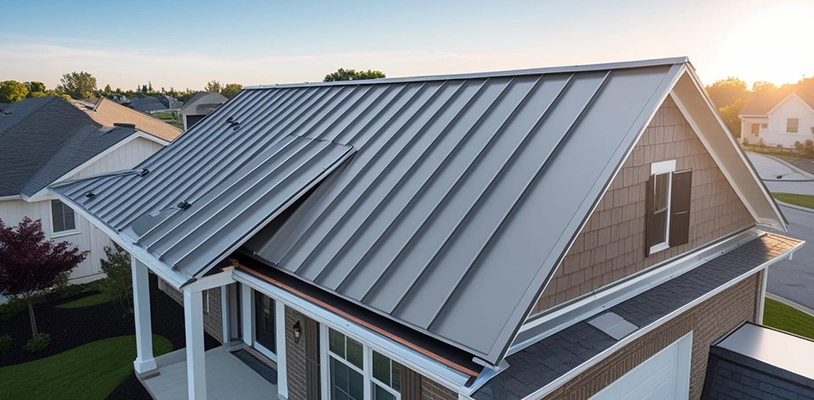
Metal roofing includes several systems, such as standing-seam panels, exposed-fastener panels, and metal shingles. The installed performance depends heavily on the system design, panel profile, coating, fastening method, flashing details, and workmanship.
Metal roofing generally costs more to install than asphalt shingles, but many homeowners consider it when they want a longer-term roofing system, a clean architectural look, strong water-shedding capability, or reduced need for frequent material replacement. Metal is not maintenance-free; seams, fasteners, sealants, penetrations, coatings, and flashings still need periodic observation.
- Long potential service life when the system is properly designed and maintained
- Strong shedding of rain and snow on suitable roof designs
- Distinct standing-seam or metal-shingle appearance
- Lower frequency of full replacement can be appealing for long-term owners
- Requires careful detailing at seams, penetrations, valleys, and transitions
Explore Triple J Roofing’s Metal Roofs page for the service overview.
Cost: Compare the Entire Roof Project, Not Just Material Price
The most visible difference between metal and asphalt is usually the initial price. National cost guides consistently place metal above asphalt for many residential projects, but the gap changes substantially depending on the metal type, shingle grade, roof complexity, tear-off requirements, underlayment, flashing, ventilation work, and labor conditions.
This Old House’s 2026 cost guide reports a much higher average installed cost for metal than for asphalt in its national examples. Those figures are useful for understanding direction, not for pricing a specific Gloucester-area roof. A real estimate should account for the actual roof measurements, slopes, valleys, penetrations, deck condition, and chosen product.
External reference: https://www.thisoldhouse.com/roofing/shingles-vs-metal-roof-cost
Durability and Service Life: Avoid Treating Any Number as a Guarantee
Homeowners often search for a single lifespan number, but roof longevity is influenced by more than material type. Installation quality, ventilation, moisture control, sun exposure, wind, tree cover, roof pitch, maintenance, and product grade can all change how a roof performs over time.
Metal systems are commonly associated with longer potential service lives than standard asphalt shingles, while asphalt products vary widely from basic to premium grades. The practical question is not “Which material lasts forever?” but “Which system fits the house, budget, ownership horizon, and maintenance plan?”
Weather, Water Management, and Flashing Matter for Both
No roof covering works alone. Underlayment, roof deck condition, flashing, ventilation, drainage, and penetration details are part of the roof system. The U.S. Department of Energy’s building-science guidance highlights roof valleys and penetrations as vulnerable water-entry locations and emphasizes integrating flashing with the roof covering and water-resistive layers.
External reference: https://bsesc.energy.gov/energy-basics/moisture-barrier-and-flashing-roof-water-managed-roof-assembly-or-roof-water-barrier
That means material selection should always include a discussion of the complete installation—not just the visible surface. A premium material installed with weak flashing details can still develop leaks.
Repairability: Think About Future Service, Not Only Installation Day
Asphalt shingles are modular, so a contractor may be able to replace a limited number of damaged shingles when the surrounding material remains serviceable. Color matching can become more difficult as the roof ages because existing shingles weather and fade.
Metal repair can be straightforward or complex depending on the panel system. A damaged exposed-fastener panel may be different to service than a concealed-fastener standing-seam roof. Repairs may involve panels, fasteners, clips, sealants, coatings, or custom flashing. Ask how future repairs would be handled before choosing a system.
If you are evaluating damage rather than planning a full replacement, start with Roof Repair to determine whether the problem is localized.
New Roof vs. Reroofing: Match the Material to the Project
Material selection also depends on whether you are building a new roof assembly or replacing an existing roof. New construction allows the roofing system to be coordinated with framing, decking, ventilation, penetrations, and flashing from the start. Reroofing requires evaluating the existing deck, old materials, drainage details, and any hidden damage discovered during tear-off.
For a new structure or addition, review New Roof Installation. For an aging existing roof, compare Reroofing options.
Questions to Ask Before Choosing Metal or Asphalt
- What is the total installed price, including tear-off, underlayment, flashing, ventilation work, and disposal?
- How does the proposed system handle valleys, chimneys, wall intersections, vents, and other penetrations?
- What maintenance does the specific product require?
- How are future repairs normally completed on this system?
- Is the roof deck in suitable condition for the selected material?
- How will color, profile, and panel or shingle style fit the home’s architecture?
- What manufacturer installation requirements apply to the proposed system?
Metal Roof vs. Asphalt Shingles FAQs
Which costs less upfront, metal or asphalt shingles?
Asphalt shingles generally have a lower initial installed cost in many residential projects. Metal roofing typically requires a higher upfront investment, though actual pricing depends on system type, roof design, labor, and project scope.
Which lasts longer?
Metal roofing commonly has a longer potential service life than standard asphalt shingles, but lifespan varies significantly with product quality, installation, climate, and maintenance.
Is a metal roof maintenance-free?
No. Metal roofing still needs periodic inspection of seams, fasteners, coatings, sealants, flashing, and penetrations.
Are asphalt shingles easier to repair?
Localized shingle repairs are often straightforward when damage is limited, but matching aged shingles can be difficult. Metal repair complexity depends on the specific system.
Which material is better for my house?
The better choice depends on budget, roof design, appearance goals, local conditions, how long you expect to own the property, and the condition of the existing roof system.
Choose the Roofing System That Fits the Property
A material comparison is most useful when it leads to a property-specific decision. Asphalt shingles may make sense when initial budget, familiar appearance, and straightforward repairability are priorities. Metal roofing may be attractive when a homeowner is planning for a longer ownership period, prefers the appearance, or wants a system with long-term durability potential.
Compare Triple J Roofing’s Asphalt Shingles and Metal Roofs pages, or visit Roofing Services to review the broader options.